Dear wonderful parents,
This couple weeks of peek, we’re going to talk about one of the most important methods in our classroom: observation.
Observation is a foundational practice in a Montessori classroom. Rather than constantly directing children, teachers take a step back and watch with intention. Through careful observation, we begin to understand each child individually—what captures their interest, how they move and explore, how they communicate, and what they are ready to learn next. For toddlers, this might look like noticing how long a child stays engaged with a material, how they repeat an action, what they tell us through their actions, or how they interact with peers and adults. This quiet, respectful approach allows children the space to show us who they are.
The purpose of observation is to guide how we support each child. Every child develops at their own pace, and observation helps us respond thoughtfully rather than react quickly. By observing, we can better understand each child’s strengths, interests, and developmental needs. It allows us to introduce activities at the right moment, support growing independence, and create an environment where children feel seen and understood. Instead of assuming what a child needs, we rely on what we observe to make informed decisions.
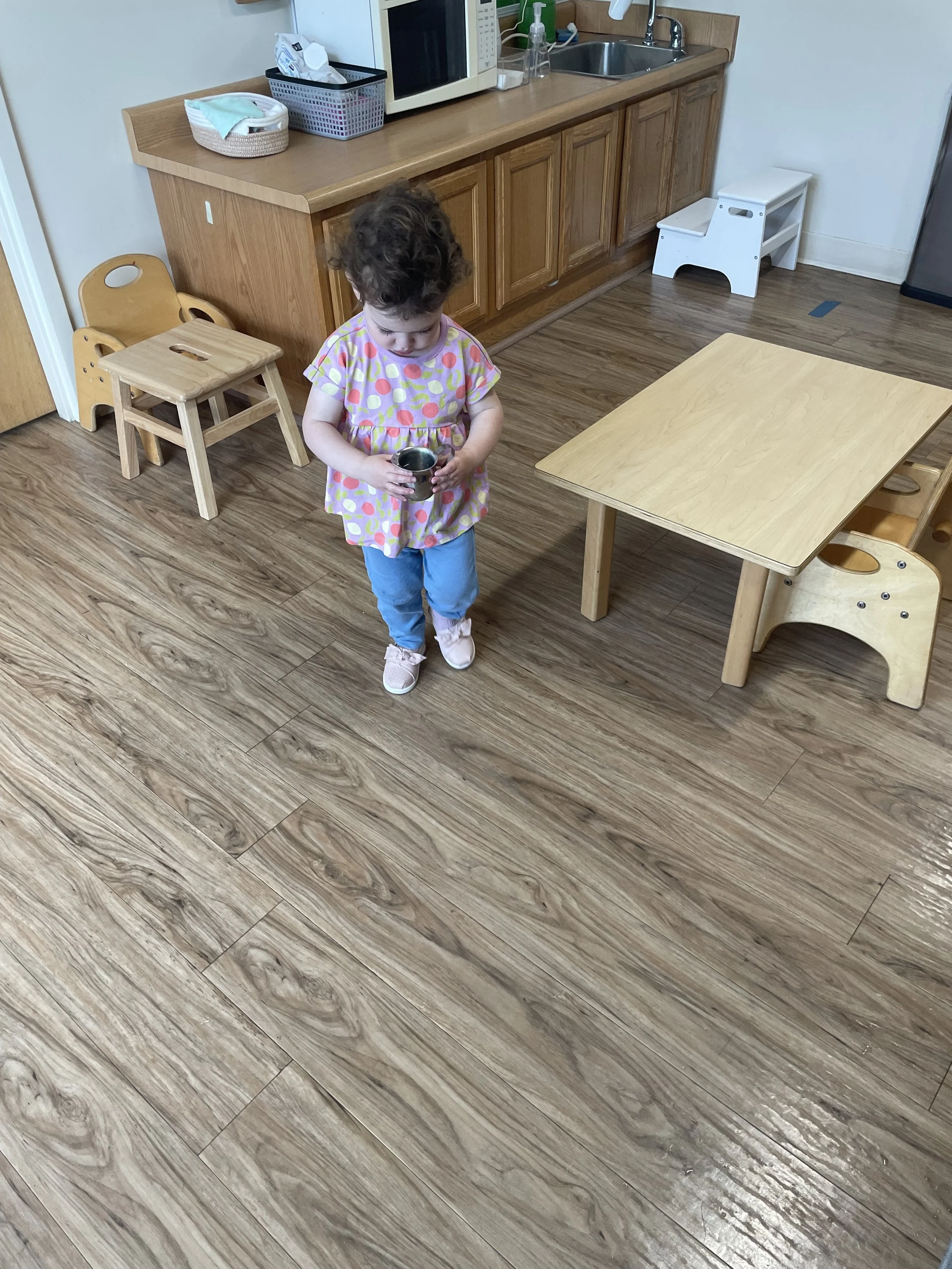
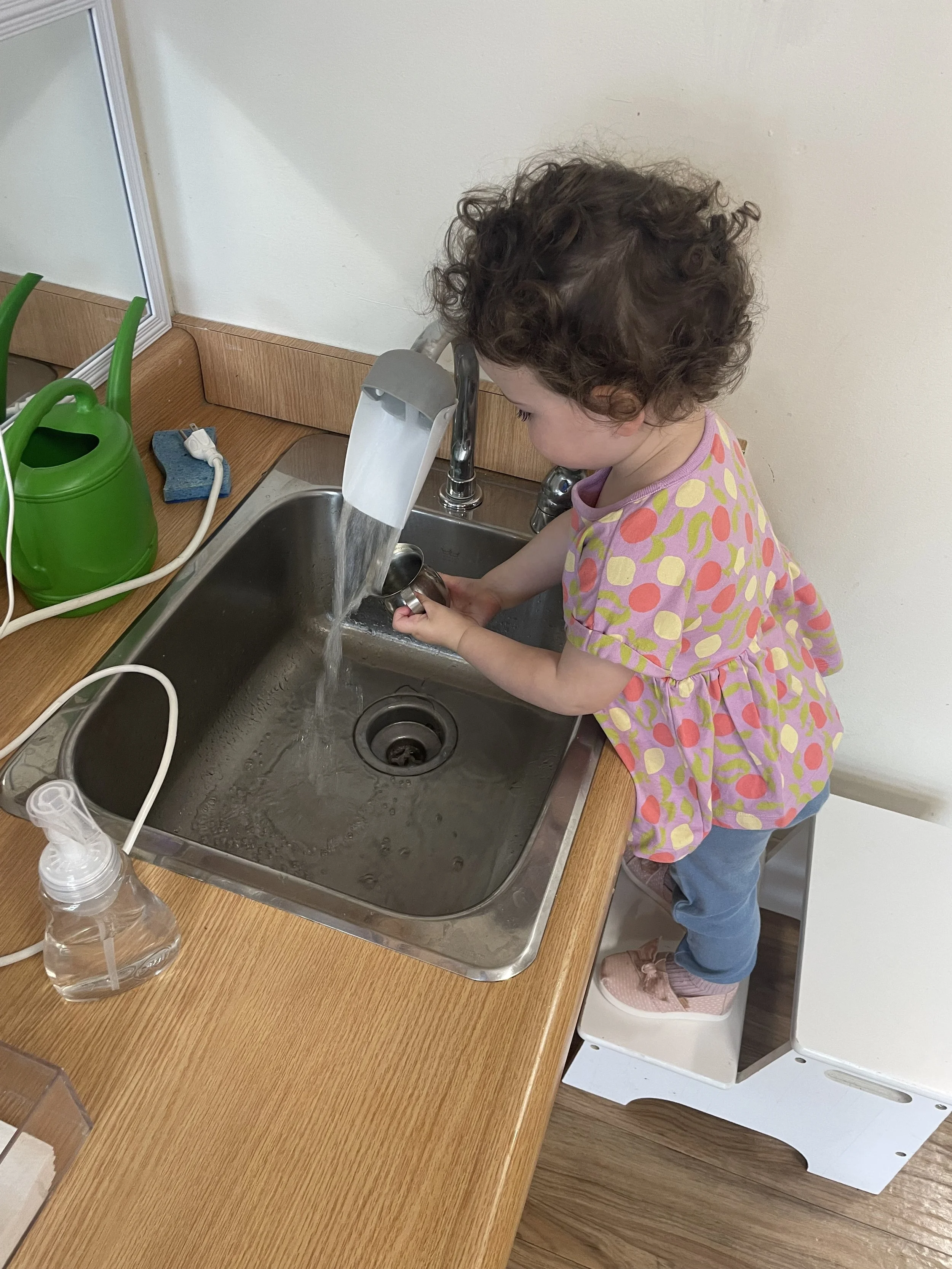
For example, through observation, we notice our children love going to the sink with whatever they find that looks like something they can put water in (like a cup/bowl/sand toys). However, they don’t quite understand that wooden materials are not for water. With this observation, we made a water transfer work in the classroom. After this work was out, we noticed children didn’t go to the sink with other works anymore!
Next week we’ll talk more about how to do observations at home!
Please apply sunscreen at home before coming to school each day. Full day students will need to have extra sunscreen here at school.
We hope you enjoy this wonderful weather outside!
Warmly,
Morahs Rachael, Kristy, Sarah, and Mary